
Why Cheap Kitchen Cabinets Peel and How to Fix the Damage Fast
Notice your kitchen cabinets peeling or warping around the edges of your doors? This is a frequent frustration for homeowners who invested in their space only to see the surface layer flake away after a few short years. At Grande Tile and Reno Plus, we spot this issue constantly when replacing low quality installations during our local remodeling projects.
Cheap materials often fail under the daily stress of kitchen heat and moisture. Fixing the damage permanently requires understanding the root material cause rather than just patching over the surface. We explain why these manufactured failures happen and how locally made custom cabinetry offers a lasting solution for your home.
What We Cover:
The Root Cause of Peeling Finishes
Why DIY Painting Makes the Damage Worse
How Custom Solid Wood Solves the Problem
Upgrading Your Kitchen Cabinetry
The Root Cause of Peeling Finishes
Many builder grade kitchens use a material called thermofoil, which is a thin plastic vinyl coating vacuum-pressed over medium density fiberboard core. This finish looks clean and uniform initially but completely lacks the structural durability needed for active cooking spaces. The factory adhesive holding the vinyl coating to the fiberboard core breaks down quickly when exposed to everyday kitchen elements like steam from kettles or heat from ranges.
Once moisture gets past the thin edge profile, the compressed wood fibers underneath absorb the water and begin to swell. This swelling forces the plastic layer to separate from its backing, leaving unsightly gaps that collect grease and dirt.
Why are my kitchen cabinets peeling off?
Your kitchen cabinets are peeling off because moisture and heat have permanently compromised the factory glue bond holding the synthetic exterior veneer to the underlying fiberboard core. Once that glue line fails, the plastic or foil layer naturally pulls back and curls away from the edges of the door profile. This delamination process accelerates rapidly near high-heat areas like dishwashers, toaster ovens, and stovetops where temperature fluctuations are most extreme. There is no reliable trade method to re-glue these curled edges because the underlying fiberboard usually distorts from the moisture, preventing a flush fit.
→ A quick tip to remember: If one door starts peeling near your sink, the rest of the high traffic areas will follow shortly due to systemic adhesive failure.
Why DIY Painting Makes the Damage Worse
Homeowners often try to save money by ripping off the loose plastic foil and painting the exposed manufactured wood core. This DIY approach almost always leads to a much bigger mess and a ruinous finish. The exposed medium density fiberboard is highly porous, acting like a giant sponge that unevenly soaks up standard interior paint and primer.
Without industrial sanding equipment and highly specialized solvent-based sealers, the painted surface will turn out rough, fuzzy, and completely unsealed against future moisture. Furthermore, the residual factory glue left behind on the wood creates a sticky barrier that causes new paint to wrinkle and bubble within weeks. Trying to salvage failing materials costs you time and leaves you with an unprofessional finish that actively lowers the property appeal of your home.
→ From a professional standpoint: Paint needs a perfectly stable, non-porous surface to adhere properly, and failing factory adhesives guarantee a weak foundation.
How Custom Solid Wood Solves the Problem
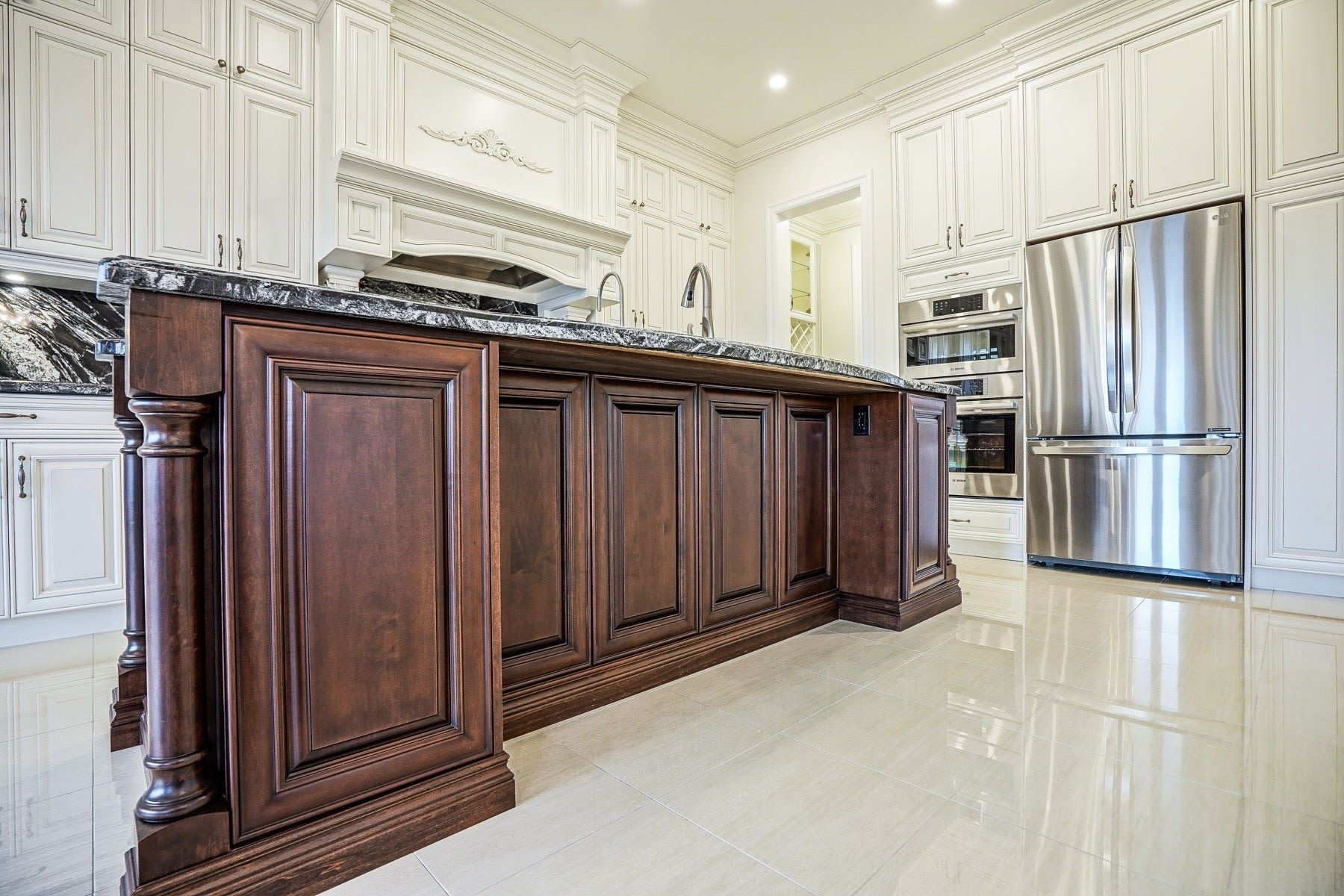
Replacing failing compressed fibers with high quality solid wood or premium cabinet grade plywood changes the entire lifespan of your kitchen renovation. Solid hardwood frames and three-quarter-inch plywood boxes handle humidity changes and heavy stone countertops without bubbling, bowing, or peeling. These natural materials expand and contract uniformly with seasonal shifts without destroying their structural glue joints or custom finishes.
In Newmarket, Ontario, our team utilizes cabinetry materials built to handle the heavy realities of daily cooking, frying, and scrubbing. Choosing locally made custom designs means you get tough baked-on coatings applied by craftsmen who understand long term durability. You no longer have to worry about steam from your morning coffee maker destroying your upper wall storage.
→ A quick tip to remember: Investing in proper materials upfront prevents the exhausting cycle of ripping out failing storage every five years.
Upgrading Your Kitchen Cabinetry
Upgrading from failing materials to custom options restores the fundamental function and beauty of your kitchen. The first step is removing the damaged units before moisture compromises your drywall or surrounding countertops. We focus on matching the right wood species, dense door configurations, and durable finishes to your specific household routine. A permanent fix means doing the job right the first time with trusted materials.
Start planning your kitchen upgrade today to get lasting results for your home.